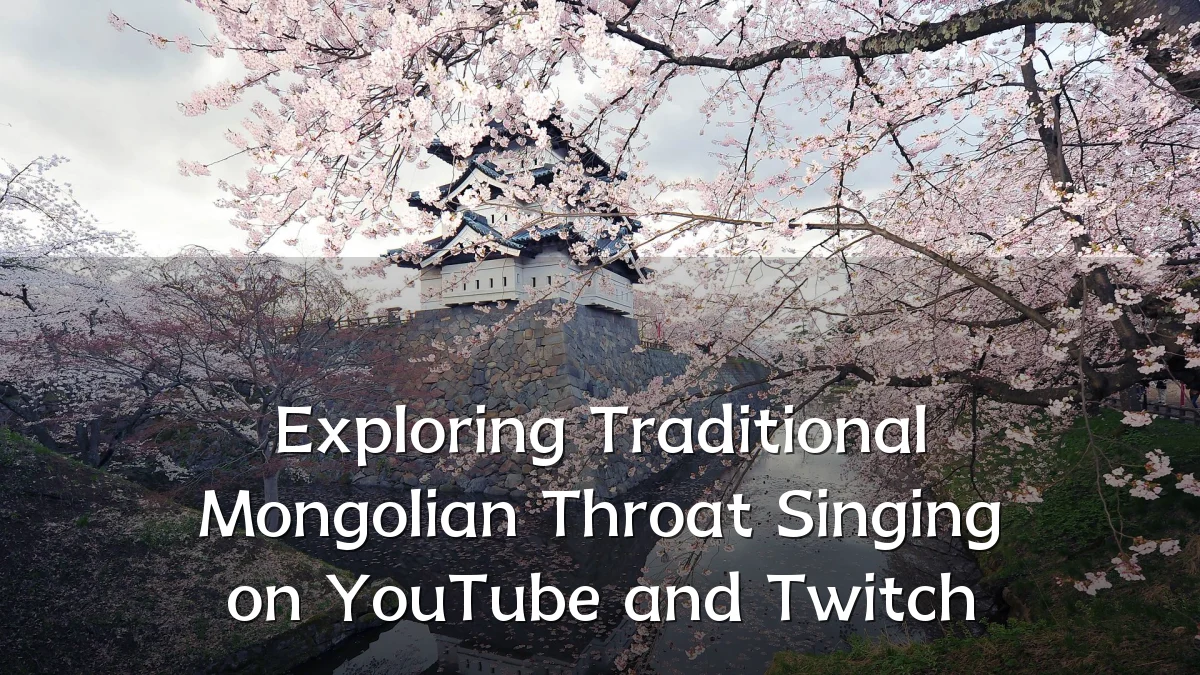
Exploring Traditional Mongolian Throat Singing on YouTube and Twitch
Recent Trends
Over the past few years, Western audiences have discovered Mongolian throat singing (khöömei) through curated playlists, reaction videos, and live-streamed performances. On YouTube, channels dedicated to Tuvan and Mongolian overtone singing have gained millions of total views, while Twitch streamers occasionally feature throat singing during music-focused broadcasts. The trend appears to be driven by algorithmic recommendations that pair the genre with ambient, meditation, or world-music content.

- Short-form remixes of khöömei clips on YouTube Shorts and TikTok are introducing the technique to younger viewers.
- Collaborations between Mongolian artists and international electronic producers have brought throat singing into lo-fi and experimental genres.
- Twitch’s “music and performing arts” category now includes occasional streamers who explain the vocal mechanics while performing.
Background
Mongolian throat singing is a traditional vocal technique that produces multiple pitches simultaneously. Historically practiced by herders in the Altai Mountains, it was primarily a communal and folk expression. Online platforms have made it accessible far beyond the region, shifting its role from localized ritual to global digital artifact.

“The core challenge is preserving the cultural and spiritual context while adapting to a platform designed for entertainment.” – paraphrased from ethnomusicologists active in online forums.
Key background points:
- Throat singing varies by style: khöömei (Mongolia), kargyraa (Tuva), sygyt (whistled). Each has distinct vocal techniques and cultural meanings.
- Earlier online presence existed on blogs and niche forums, but video platforms drastically expanded reach after 2015.
- Official YouTube channels of Mongolian cultural organizations post archives, but independent artists often have larger followings.
User Concerns
Viewers and practitioners raise several issues as the genre grows online. These concerns affect both content creators and the audience:
- Authenticity vs. performance: Some worry that simplified or “decorative” uses of throat singing in background music erode its traditional meaning.
- Cultural credit: Lack of proper attribution in remixes or reaction videos can lead to accusations of appropriation.
- Monetization disparities: Twitch streamers may earn more from a single sponsored session than a Mongolian traditional artist earns from annual festival appearances—raising questions about sustainability.
- Moderation gaps: Both platforms struggle to flag off-topic comments or hostile behavior in streams that mix music with political discussions about Inner Mongolia or ethnic identity.
Likely Impact
The ongoing exposure is unlikely to reverse but will probably reshape how throat singing is taught, practiced, and perceived. Several trends are probable:
| Area | Likely Impact |
|---|---|
| Preservation | Video archives help preserve rare recordings, but over-reliance on digital copies may reduce face-to-face apprenticeship. |
| Audience base | Global audience will continue to grow, especially through algorithm-driven discovery in wellness and world music niches. |
| Artist income | A minority of top streamers may earn stable income via subscriptions, donations, and crowdfunding, but most traditional performers will not see direct financial benefit. |
| Cultural perception | Simplified or “Westernized” interpretations may become the default for casual listeners, potentially overshadowing regional styles. |
What to Watch Next
Several developments will indicate whether the trend deepens or stabilizes. Observers should monitor:
- Platform policy changes: How YouTube and Twitch handle cultural heritage content in their monetization and copyright policies.
- Formal partnerships: Whether UNESCO or Mongolian cultural ministries create verified channels or streamer accreditation programs.
- Audience feedback loops: If reaction videos shift from novelty to long-form interviews, that would signal a more mature engagement.
- Language barriers: Machine-translated subtitles improve but remain uneven; better translations could open deeper discussions.
- Cross-platform migrations: Newer platforms (e.g., Bluesky, audio-only apps) may draw throat-singing communities away from YouTube and Twitch, fragmenting the audience.